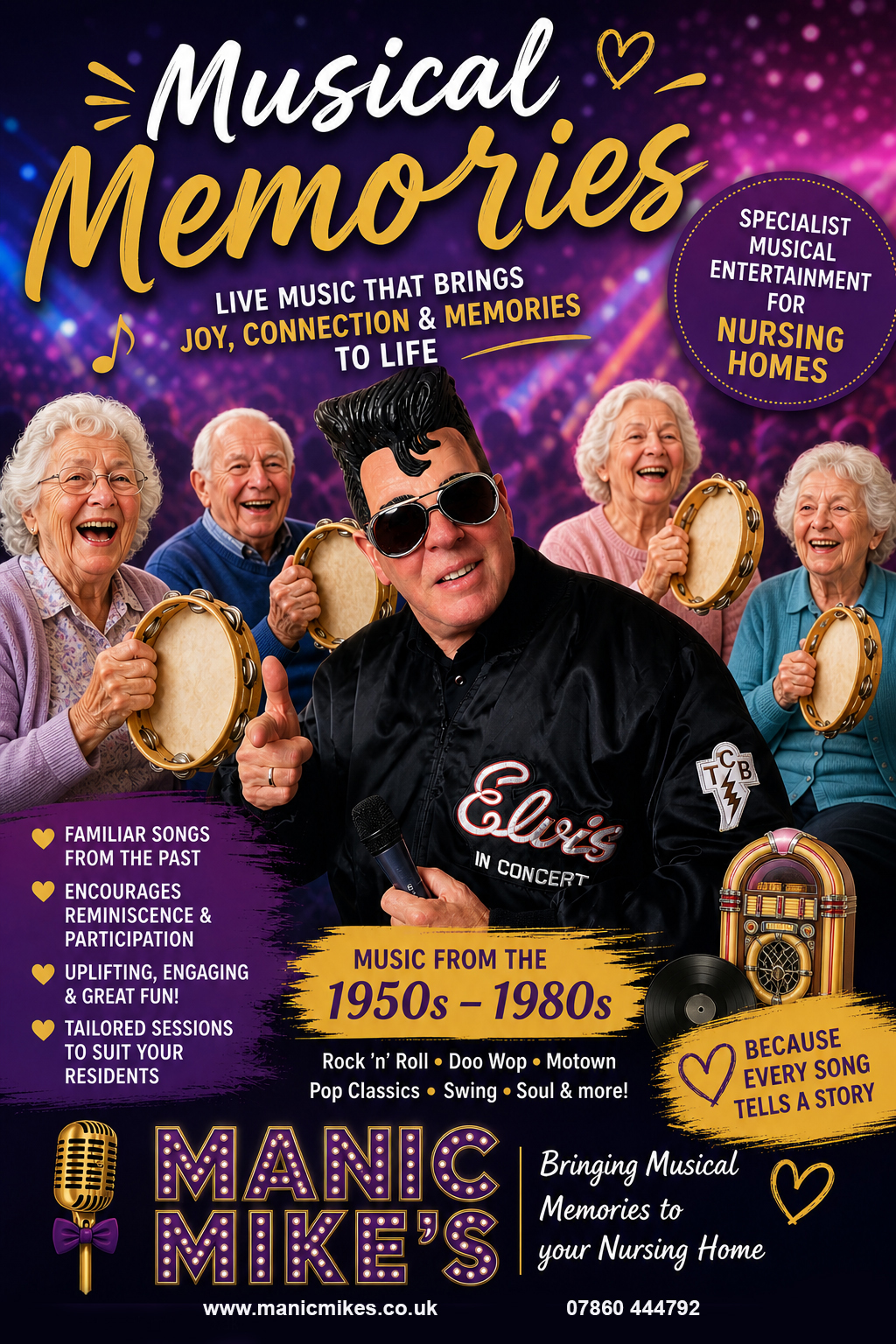
You can feel it in the room within minutes. A familiar chorus starts, one resident taps the arm of their chair, another quietly mouths every word, and suddenly the whole lounge has a bit more life in it. That is the real value of care home music entertainment. It is not just about putting songs on in the background. It is about creating a moment people can join, remember and genuinely enjoy.
For activity co-ordinators and care teams, that difference matters. A generic playlist can fill silence, but it will not always spark connection. The right entertainer can turn an ordinary afternoon into a proper event - something residents talk about afterwards, something families are pleased to walk in on, and something staff do not have to carry on their shoulders from start to finish.
What good care home music entertainment actually does
Music in a care setting works best when it is personal, recognisable and easy to join in with. That sounds obvious, but it is where many sessions go wrong. If the volume is too high, the set is too modern, or the performer is too focused on themselves, residents can quickly switch off.
A good session brings people in rather than performing at them. That might mean a singalong built around wartime favourites, 50s rock and roll, 60s classics or old pub songs that people know without thinking. It might mean a bit of gentle hosting, a few laughs, and space for residents to clap, request tracks or sing a line if they fancy it. In some homes, karaoke-style participation works brilliantly. In others, it is better as a softer, guided singalong. It depends on the room, the age range and the confidence of the residents.
That is why a one-size-fits-all approach rarely delivers much. The best entertainment is shaped around the people in front of you.
Why nostalgia matters in care home music entertainment
Nostalgia is not a gimmick in this setting. It is often the key that opens the door.
Residents may not remember what they had for lunch, but they can remember all the words to a song they danced to at 18. A tune from the 1950s, 1960s or 1970s can pull someone into the present in a lovely, unexpected way. It can prompt conversation, stir memory and encourage interaction between residents who might not normally chat much.
That is especially valuable in homes where some residents live with dementia or reduced mobility. Music can reach people in a way conversation sometimes cannot. Not every person will respond in the same way, and no entertainer should pretend otherwise, but familiar songs often create a safer and more welcoming way in.
In practical terms, that means a strong care home set should not be built around whatever is fashionable. It should be built around what is meaningful. Think Vera Lynn, Elvis, Cliff Richard, The Beatles, Dusty Springfield, Tom Jones, Doris Day, Frankie Valli, ABBA and plenty of standards people can recognise from the first few notes.
Background music or interactive entertainment?
There is room for both, but they are not the same thing.
Background music can be useful during lunch, a summer fete or a quieter social afternoon. It adds atmosphere without demanding attention. The problem comes when homes book "entertainment" and receive little more than a speaker in the corner and somebody pressing play. Residents deserve better than that.
Interactive care home music entertainment gives the room shape and energy. It offers light hosting, eye contact, warmth and the chance to respond. That could be call-and-response songs, themed decades sessions, birthday shout-outs, gentle dancing from seats, or a cheeky bit of audience participation that gets a smile without putting anyone on the spot.
The trick is reading the room properly. In a care home, bigger is not always better. The strongest entertainers know when to lift the energy and when to dial it back. They know how to include quieter residents, not just the loudest people in the front row. That balance is where experience really shows.
What activity co-ordinators should look for
If you are booking for a home in Ashford, Maidstone, Folkestone or elsewhere in Kent, it helps to ask a few straightforward questions before you confirm anything.
First, ask about music choice. Can the entertainer tailor the set to your residents, or do they turn up with the same songs every time? A big library matters because different homes respond to different eras and styles.
Second, ask how interactive the session is. Some homes want a full singalong feel with hosted fun and lots of engagement. Others need something calmer because of the layout, the time of day or the needs of the residents. A professional should be able to adapt without fuss.
Third, check the practical side. Public liability insurance, PAT-tested equipment, sensible volume levels and reliability are not glamorous topics, but they matter. In care settings, peace of mind is part of the service.
Finally, ask whether they understand older audiences. Entertaining at a wedding or pub night is one skill. Entertaining in a care home is another. The pace, the warmth and the choice of material all need a different touch.
The best sessions feel like a proper occasion
One thing homes often tell us is that residents enjoy an event more when it feels like something special rather than just another slot on the planner. That does not mean overcomplicating it. It means giving the session a bit of sparkle.
A themed afternoon can do wonders. A 1940s tea dance, a 1950s rock and roll hour, a 1960s singalong or a good old-fashioned party set with bunting, props and birthday mentions instantly gives people something to talk about. Families visiting on the day can join in too, which helps turn entertainment into a shared experience rather than a passive one.
That is often where a hosted disco-style format works better than a standard singer. With the right personality behind the microphone, you get music, banter, audience participation and the sense that something is happening in the room. It feels less like a performance on a stage and more like a social occasion everyone is invited into.
Care home music entertainment is not just for big seasonal events
Christmas parties, summer garden days and jubilee-style celebrations are obvious bookings, and they can be brilliant. But the smaller dates matter too.
A rainy Tuesday in February can feel very long in a residential setting. A well-pitched music session can break that up beautifully. Monthly entertainment often works better than saving everything for one or two large occasions because residents build familiarity and confidence. They know the songs, recognise the format and feel more comfortable joining in over time.
Regular sessions also help staff. When you know the entertainment will be upbeat, dependable and easy to manage, it takes pressure off the activities team. That has real value in busy homes where staff are juggling a lot already.
Why local knowledge helps
There is something to be said for booking an entertainer who understands the homes and audiences across Kent. Crowds differ, even in care settings. A home in Maidstone may want one sort of atmosphere, while a community event in Folkestone or a smaller home near Ashford may suit another. Local entertainers who work these areas regularly tend to arrive with a better sense of what lands well and how to keep things relaxed but lively.
That does not mean every booking should be identical. Quite the opposite. It means the entertainer has enough experience to make sensible adjustments without making a fuss about it.
For that reason, care homes often get more from personality-led entertainment than a cheap, off-the-shelf disco. If the person running the session can chat, host, encourage and adapt, the whole room benefits. That has long been the difference with Manic Mike’s - it is not about standing behind equipment and hoping for the best. It is about getting people involved, keeping things warm and making the event feel alive.
The best care home music entertainment leaves the room a little brighter than it found it. If residents are smiling, singing and chatting long after the last song, you have not just filled an hour - you have given people a proper moment worth having.