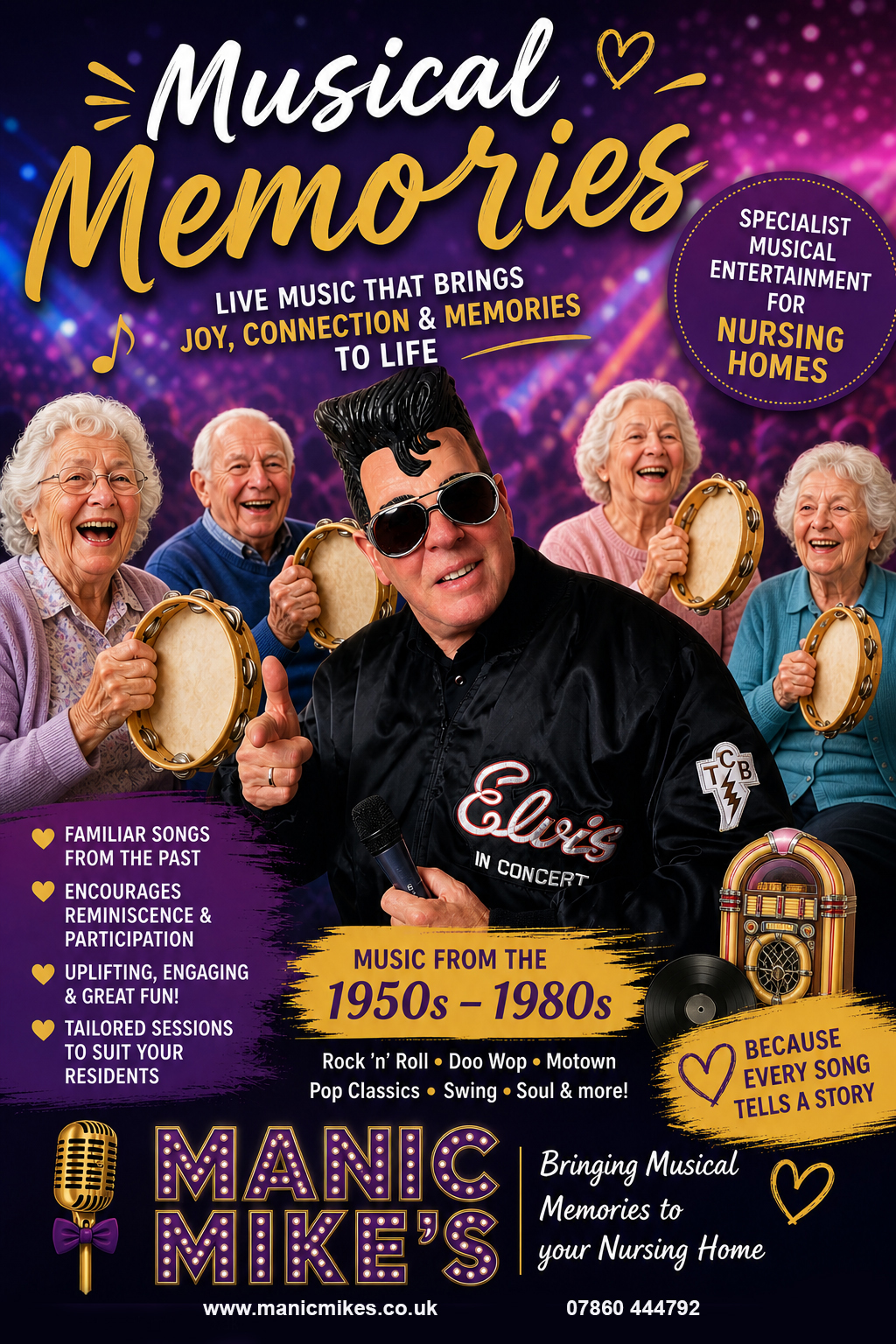
The best Folkestone care home singalong example is not a performer standing at the front firing out songs while everyone else politely watches. It is the moment a resident who has barely said a word all afternoon suddenly joins in with the chorus of Que Sera, Sera. It is a carer dancing with someone from their chair, a room full of clapping hands, and a favourite tune bringing back a familiar smile.
That takes more than pressing play on a few old records. A proper care home singalong needs the right pace, the right songs, clear hosting and room for every resident to take part in their own way. Here is what a lively, respectful afternoon in a Folkestone care home can look like.
A Folkestone care home singalong example from start to finish
Picture a lounge in Folkestone with residents gathering after lunch. The room is laid out so everyone can see the entertainer, with clear paths for walkers, wheelchairs and staff moving around. The volume begins gently. There is no need to blast the room before people have had a chance to settle.
The opening song is something friendly and instantly recognisable, perhaps You Are My Sunshine or Daisy Daisy. Rather than launching straight into a full performance, the host welcomes the room, introduces themselves and invites everyone to hum, clap or sing if they fancy it. No pressure, no spotlight sprung on somebody who would rather listen.
That first ten minutes matters. It gives residents time to get comfortable, lets staff see who is engaging, and creates a relaxed sense that this is their afternoon, not a show being done at them.
Once the room has warmed up, the session can move through well-known songs from the 1940s, 1950s, 1960s and 1970s. Think wartime favourites, music hall standards, early rock and roll, Doris Day, Elvis, Cliff Richard, The Beatles and the big chorus numbers that seem to live in people’s memories. The right choice depends on the residents in the room. A home with lots of people who grew up dancing in the 1960s may respond brilliantly to Dancing Queen, while another may light up for We’ll Meet Again.
The key is not simply picking old songs. It is reading the room. If a tune gets feet tapping, it earns another song from that era. If it does not land, the host moves on without making a fuss. A flexible backing-track library makes that possible.
It feels like a shared occasion, not background music
A good singalong has shape. There may be a gentle quiz between songs - perhaps finishing a famous lyric, naming a singer or remembering a television theme. There can be a little harmless banter, plenty of encouragement and the occasional prop where appropriate. Nothing confusing or over the top. Just enough colour to make the lounge feel different from an ordinary Tuesday.
At Manic Mike’s, that interactive approach is central to the show. The aim is to get the room involved, whether that means singing every word, tapping along from an armchair, waving a hand or simply enjoying the familiar sounds with friends. One resident may want the microphone for a line of Sweet Caroline. Another might prefer to watch and smile. Both are joining in.
Staff play a huge part too. When carers and activity coordinators sing along, residents often feel safer doing the same. They know the faces around them, and a bit of shared silliness can break down the feeling that anyone has to perform perfectly. Spoiler: they do not. This is a singalong, not an audition for the West End.
A sample 60-minute running order
A typical hour might begin with ten minutes of welcoming songs and easy clapping. The next twenty minutes could focus on 1940s and 1950s classics, followed by a short breather and a light music quiz. The final half-hour can lift the energy with 1960s and 1970s favourites, before ending on a warm, familiar number that people can leave humming.
That structure is useful, but it should never be rigid. If residents are especially engaged with a particular era, it makes sense to stay there. Equally, if the room becomes tired, a calmer song and a short pause can work far better than trying to force a big finish.
Why familiar music can change the atmosphere
Music does not need a complicated explanation to have an effect. A song associated with a first dance, a family party, national celebrations or a favourite Saturday night programme can bring a spark of recognition. People may remember lyrics that surprise their relatives and carers, even when recalling recent events is harder.
It is worth being careful with claims here. A singalong is entertainment, not treatment, and every resident experiences music differently. But activity teams across Kent know how powerful a well-chosen song can be for mood, connection and conversation. Sometimes the chatter afterwards is as valuable as the singing itself: “I saw that singer at the Odeon”, “My husband loved this one”, “We used to dance to that.”
For families visiting, a music afternoon can offer a lovely shared moment too. They do not have to find the perfect thing to say. They can sit beside their relative, sing a chorus and enjoy being together.
Getting the practical details right
The fun only works when the planning is sound. Before a care home singalong in Folkestone, the entertainer should ask about the residents, the available space, the best time of day and any songs or themes the home would particularly like included. A large group in the main lounge needs a different approach from a smaller dementia-friendly session in a quiet communal area.
Sound levels need attention. Older ears can be sensitive, hearing aids can react badly to sudden feedback, and some residents may find excessive volume uncomfortable. Professional equipment should sound clear at a sensible level, with the performer able to adjust quickly rather than treating volume as a substitute for atmosphere.
Accessibility matters just as much. Cables should be managed safely, the set-up should not block exits or walking routes, and there must be room for staff to support residents. A professional entertainer brings appropriate equipment and public liability insurance, but the home’s team remains the expert on individual residents and their daily needs. The strongest events happen when both sides work together.
Choosing songs for a mixed group
There is no magic playlist for every care home in Kent. Residents are individuals, and musical taste is wonderfully stubborn. Some will love Vera Lynn; others will be waiting for Tom Jones. Some want a proper knees-up, while others prefer gentle ballads and time to listen.
That is why requests matter. Ask residents, relatives and staff in advance for favourite singers, special songs and local memories. A seaside-flavoured number may go down a treat in Folkestone, while a resident from Ashford or Canterbury might have their own musical associations to bring to the party.
It also helps to avoid making assumptions based only on age. Include the established classics, certainly, but leave room for surprises. A 1970s anthem, a country favourite or a cheeky novelty song may be the one that gets the biggest reaction.
The difference is in the hosting
A playlist can provide music. A hosted singalong provides reassurance, momentum and a bit of sparkle. The entertainer watches who is responding, gives people time to find the chorus, gently includes quieter corners of the room and knows when to bring the energy down again.
That experience is particularly valuable in care settings, where a show cannot be one-size-fits-all. The room may include residents with different levels of hearing, mobility, confidence and concentration. Keeping things upbeat is important, but so is allowing dignity, choice and comfort at every stage.
The most memorable care home entertainment is rarely the flashiest. It is the afternoon when residents feel seen, staff get to share a laugh, and a room that began quietly ends with people calling out, “One more song!” That is a proper singalong - and a brilliant reason to keep the music playing.