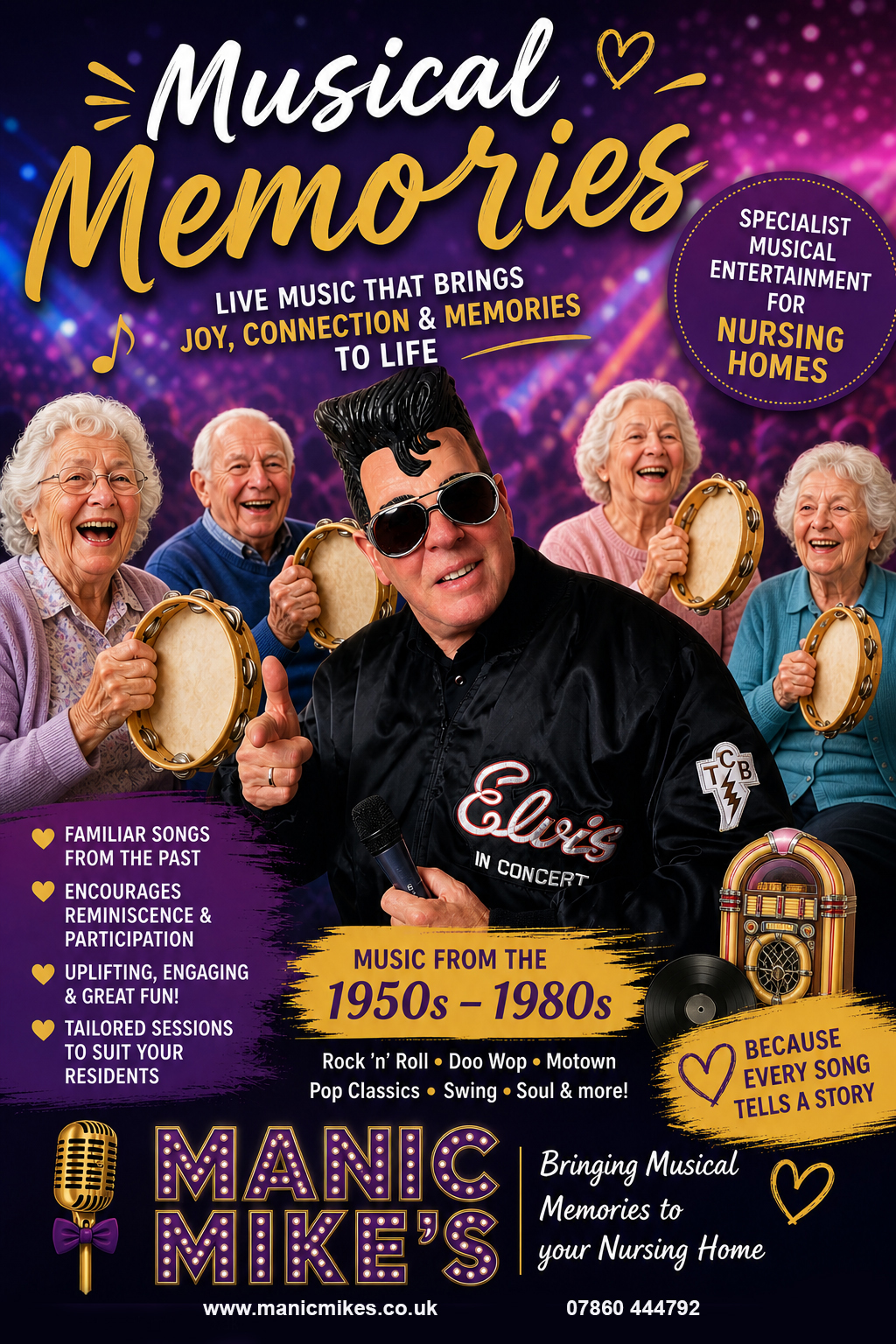
A favourite record can do more than fill an afternoon. It can prompt a story about a first dance, bring a quiet resident into a singalong, or turn the lounge into a proper knees-up for 45 minutes. That is why a guide to care home music activities needs to be about more than pressing play. The best sessions give people choice, dignity and a chance to feel part of the show.
For activity coordinators across Kent, from Ashford and Folkestone to Maidstone and Canterbury, music is often one of the most reliable ways to bring a group together. But it only works brilliantly when the format, volume, songs and pace suit the people in the room. A playlist alone is not an activity. A well-hosted session, with familiar tunes, gentle encouragement and room for residents to join in their own way, is another matter entirely.
Why music belongs at the heart of care home life
Music reaches people without demanding that they find the right words. A song from the 1950s, 1960s or 1970s can bring back faces, places, dances and tiny details that may otherwise stay tucked away. For some residents, that means singing every chorus. For others, it means tapping a hand, smiling at a lyric or simply enjoying the company around them. All of those responses count.
There is a social benefit too. A shared singalong gives residents, relatives and staff something to do together without putting anyone on the spot. It can help new residents feel included and give regular residents a chance to take the lead with a favourite request. The atmosphere matters: the aim is not a formal performance that people politely watch, but a room where everyone feels welcome to join the party.
That said, music is not a magic button. Residents have different tastes, hearing levels, cultural backgrounds and memories. One person may light up at Vera Lynn; another may prefer Motown, country, musical theatre or a bit of rock and roll. Good planning makes space for that variety rather than assuming every older person wants the same dozen songs.
A guide to care home music activities: start with the residents
Before choosing a theme, ask staff and residents a few simple questions. What age groups live in the home? Which songs do people already sing during the week? Are there performers, dancers, choir members or keen karaoke fans among the residents? Do particular songs bring comfort, or should they be avoided because they trigger sadness or distress?
A request board can be wonderfully useful, especially when relatives contribute. Ask for a favourite artist, a first-dance song, a tune from a hometown, or a song that always gets Mum or Dad singing. This creates a more personal session and gives the entertainer a far better starting point than a generic ‘oldies’ set.
Timing deserves just as much thought. A lively late-evening disco may suit a social club, but many care homes get better engagement in late morning or mid-afternoon, when residents are settled and staff can support them. A 45 to 60-minute show is often plenty. It leaves people wanting another go rather than tiring them out.
Pick a format, not just a playlist
The right type of music activity depends on mobility, confidence and the mood you want to create. A themed show works well for a larger gathering, while a smaller reminiscence session can be calmer and more conversational. Mixing formats across the month keeps things fresh.
Nostalgia singalongs
These are the crowd-pleasers for good reason. Build around recognisable choruses and give residents time to join in. Songs such as Que Sera, Sera, We'll Meet Again, Sweet Caroline, My Way or classic Beatles numbers can work beautifully, but the real trick is reading the room. If a song lands, let it breathe. If it does not, move on without fuss.
Lyrics printed in large, clear type can help, though never make reading a requirement. Some residents will know every word by heart; others will enjoy listening. A confident host can prompt the choruses, praise every contribution and keep the mood buoyant without treating adults like children.
Decades parties with props and personality
A 1950s rock and roll afternoon, swinging 60s party or 70s disco can give an ordinary activity slot a proper event feel. Simple themed props, colourful lighting and a few playful costume touches help set the scene, as long as the room does not become cluttered or overstimulating.
This is where hosted entertainment earns its keep. Rather than leaving background music running, an experienced presenter can introduce songs, invite memories, lead a hand-jive or seated dance, and keep the banter warm and respectful. There is a big difference between playing Dancing Queen and turning it into a moment the room shares.
Karaoke with no pressure attached
Karaoke can be a cracker of an activity when it is offered as an invitation, not a test. Some residents will grab a microphone immediately; others may prefer to sing from their seat with a friend or staff member. Duets, group choruses and ‘come on, everybody’ numbers remove the fear of performing solo.
Keep the choices familiar, the microphone volume sensible and the applause generous. The point is participation, not pitch-perfect vocals. A resident who sings two lines of their wedding-song favourite has had a win, whether they finish the number or not.
Seated movement and rhythm sessions
For homes with residents who enjoy being active, add clapping, scarves, gentle arm movements or percussion instruments. This can make a session more physical without excluding people who use wheelchairs or need to remain seated. Demonstrate slowly, offer alternatives and make it absolutely fine to sit and watch.
Rhythm activities suit upbeat songs, but do not run them at full pelt for an hour. Alternate lively moments with familiar slower tunes so everyone can catch their breath and stay comfortable.
Get the sound and setting right
Louder is not livelier. In fact, excessive volume is one of the quickest ways to lose a room. Residents with hearing aids may find sharp frequencies uncomfortable, while people with dementia can become overwhelmed by noise, flashing lights or too much movement. Clear vocals at a moderate level normally beat booming bass every time.
Set up speakers so sound is spread across the room rather than fired directly at the front row. Leave clear routes for wheelchairs, walking aids and staff, and make sure cables are safely covered. If lighting is used, avoid strobe effects and sudden blackouts. A little colour creates atmosphere; a nightclub setup may be too much.
It is also worth considering the room itself. A lounge with hard surfaces can create echo, making lyrics difficult to follow. Curtains, soft furnishings and careful speaker positioning can make a surprising difference. Ask staff where residents are most comfortable sitting and avoid rearranging familiar spaces more than necessary.
Make participation easy, voluntary and meaningful
The strongest care home sessions are inclusive without being pushy. Invite, encourage and celebrate, but accept ‘no thank you’ straight away. A resident who stays on the edge of the room may still be enjoying every minute, particularly if they are watching friends, relatives or familiar staff take part.
Staff involvement can transform the energy. When carers sing a chorus, do a small dance or help choose songs, residents often feel safer joining in. It also gives staff a lovely chance to see another side of the people they support. Just make sure nobody is expected to perform when they are busy with care duties.
If relatives attend, give them a role too. They can request a song, share a short memory or dance beside a loved one. These small interactions are often the bits families remember long after the final song.
Work with an entertainer who understands the room
For a special event, a professional entertainer should be able to adapt in real time. That means arriving with a broad music library, taking requests, keeping announcements clear, and changing pace when the room needs it. It also means bringing safely maintained equipment, appropriate insurance and a sensible setup plan agreed with the home.
A standard disco can feel distant in a care setting. A hosted music experience is different: it has warmth, humour, eye contact and a bit of showbiz sparkle, without making anyone feel exposed. Manic Mike’s brings that interactive approach to care homes across Kent, with nostalgia-led music, karaoke and themed party sessions shaped around the residents in front of him.
When booking, be clear about numbers, mobility needs, dementia support, preferred decades, available space and the home’s usual routine. Tell the entertainer whether you want a gentle afternoon singalong, a birthday celebration or a full themed occasion. The more they know, the more personal the event will feel.
The real measure of a successful music activity is not whether every song goes exactly to plan. It is the resident humming on the way back to their room, the relative saying, ‘I have not seen him smile like that in ages’, and the room asking for one more chorus before the afternoon is over.